Comparison
9ct gold or Palladium 950?
Palladium 950 is meaningfully harder, so if your hands take a beating the choice is largely made for you.
| 9ct gold | Palladium 950 | |
|---|---|---|
| Surface hardness | Mohs 3.5 | Mohs 4.75 |
| Density | 11.2 g/cm³ | 12 g/cm³ |
| Resizable | Yes | Yes |
| Hallmarked | Yes | Yes |
| Hypoallergenic | Alloy dependent | Yes |
| Price from | £395 | £745 |
What the difference actually feels like
Palladium 950 is 1.1 times the weight of 9ct gold for the same ring. On paper that is a number; on the hand it is the difference between a ring you forget about and one you are aware of every time you move. Neither is better. It is worth knowing which you want before you spend anything.
Palladium 950 sits at Mohs 4.75 against 3.5. Ordinary household dust carries quartz at Mohs 7, which is the line that matters: below it a ring collects fine scratches from nothing more than daily life. The gap here is real but not dramatic.
The straight answer
Choose 9ct gold if a traditional ring on a real budget, or if anyone who wants it resizable for life.
Choose palladium 950 if a white metal at less than platinum, or if sensitive skin.
Still torn? The metal chooser asks six questions and picks one, and it will tell you if neither of these is right.
In both materials
Rings to look at
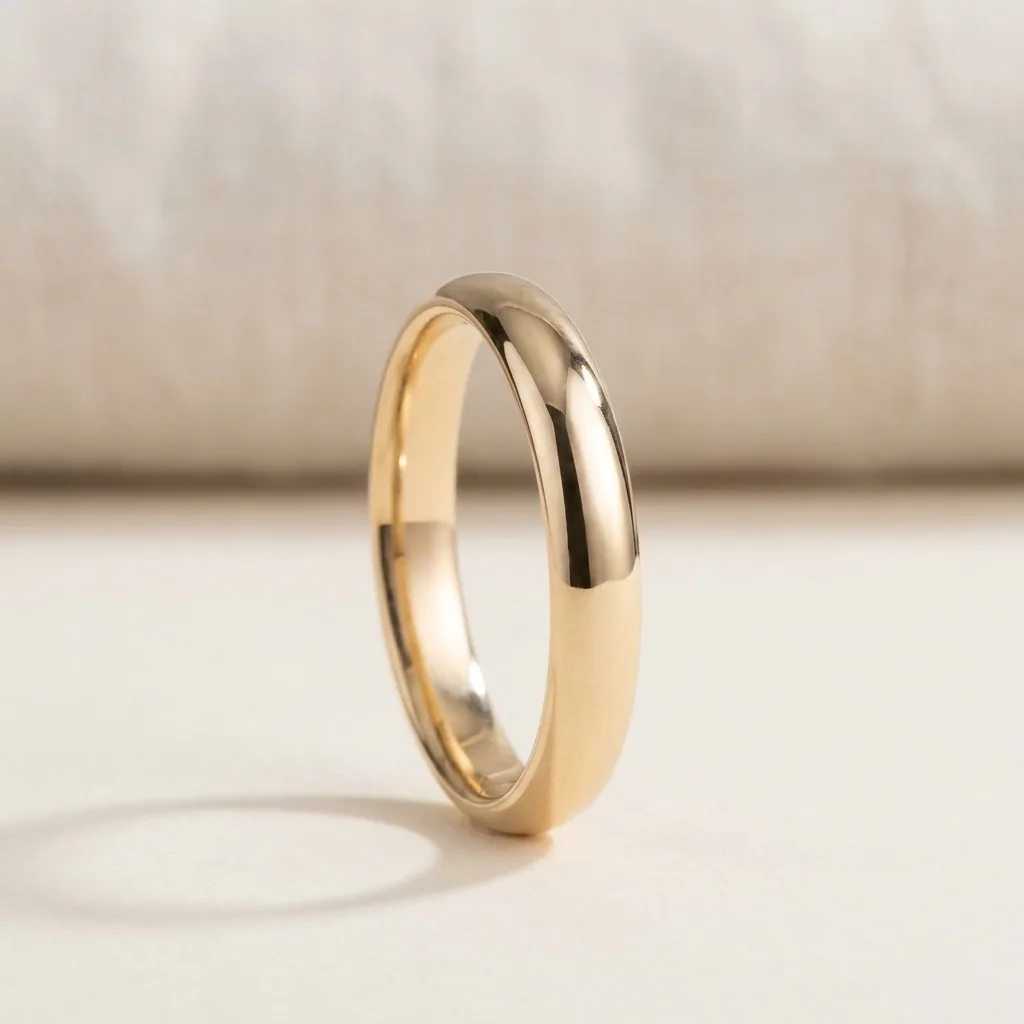
Court, 9ct
Rounded inside and out. The most comfortable profile there is.
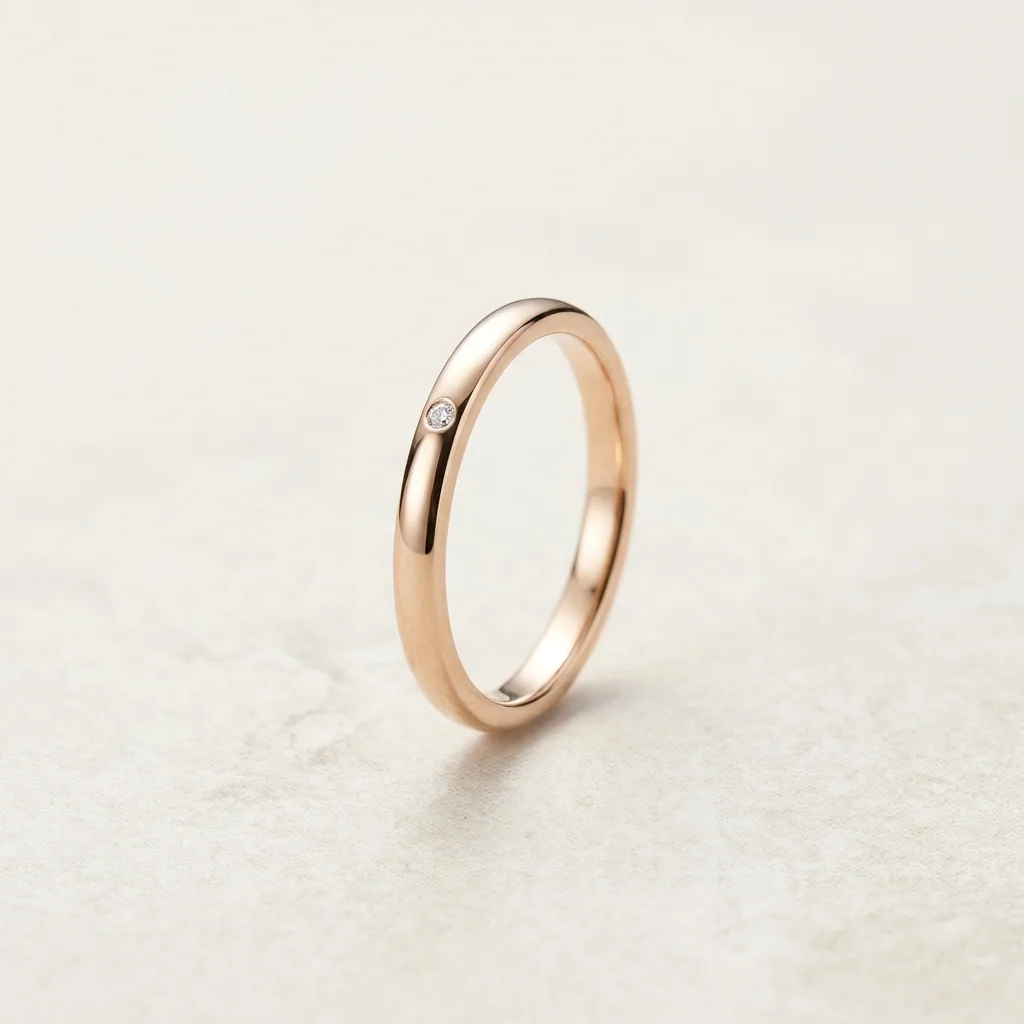
Promise band
Slim, hallmarked, with one small stone. Not everything has to be a statement.
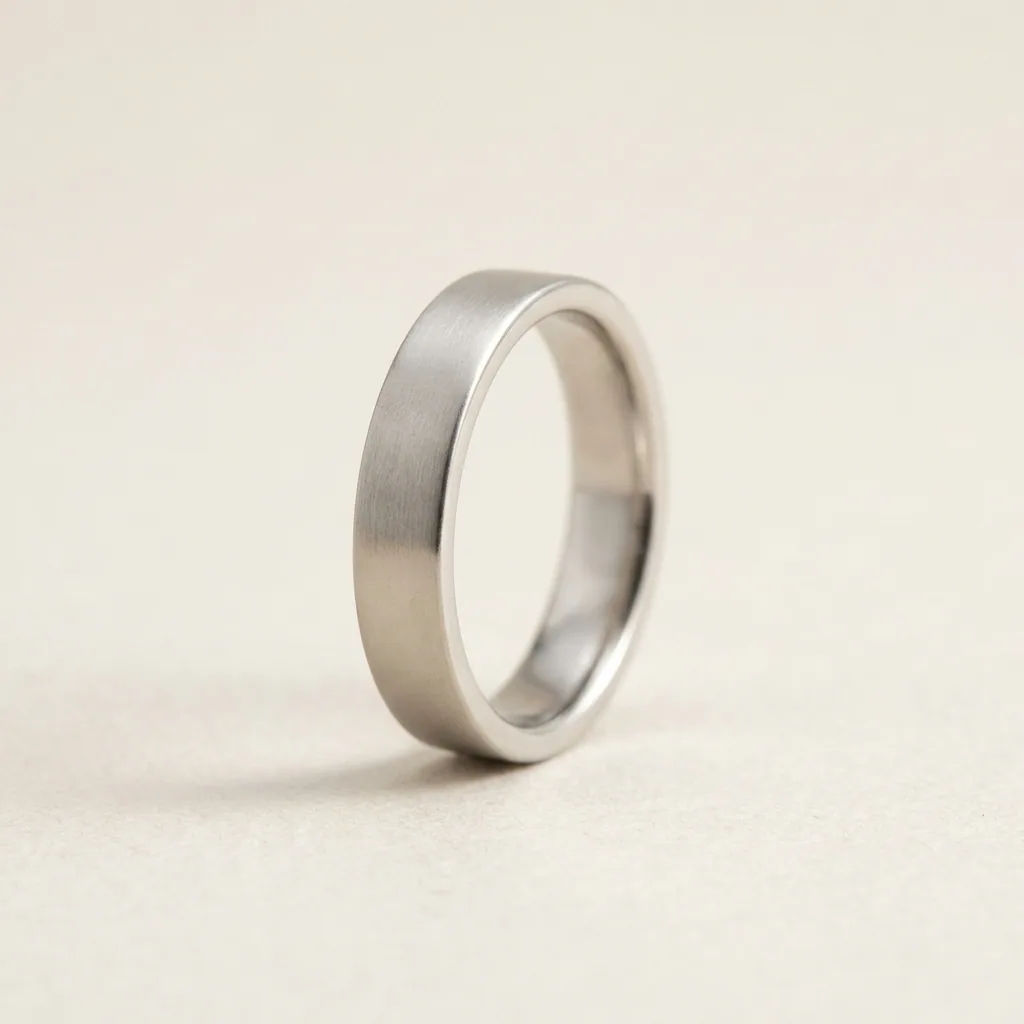
Flat court, palladium
White, hallmarked, and half the weight of platinum.
Common questions
- Is 9ct gold or palladium 950 harder wearing?
- Palladium 950, at Mohs 4.75 against 3.5. Airborne dust contains quartz at Mohs 7, so anything below that scratches from ordinary wear alone.
- Which is heavier?
- Palladium 950, at 12 g/cm³ against 11.2. That is 1.1 times the weight, which is very obvious on the hand rather than a technicality.
- Can both be resized?
- Yes, both. Either can be sized up or down by a bench jeweller, and we do it free.
- Which costs more?
- Palladium 950, starting at £745 against £395. That is about 89% more before any stone or inlay.
- Are both hallmarked?
- Yes, both, at the Birmingham Assay Office.